Behind the Build with: Why Don’t Robots Take Me Seriously
September 17, 2026

The AI & Tech Sandbox hosted its first Global Hackathon in June 2026.
Teams could choose from three briefs: Agentic Discovery, Intelligence to Action, and Data-Driven Creative at Scale. Our judging panel of tech builders was looking for ideas that could move beyond concept and become useful, scalable solutions for brands.
With a $500,000 prize fund at stake, there was a lot to play for, and ultimately, four lucky winners were awarded a share of the funding to bring their idea to life.
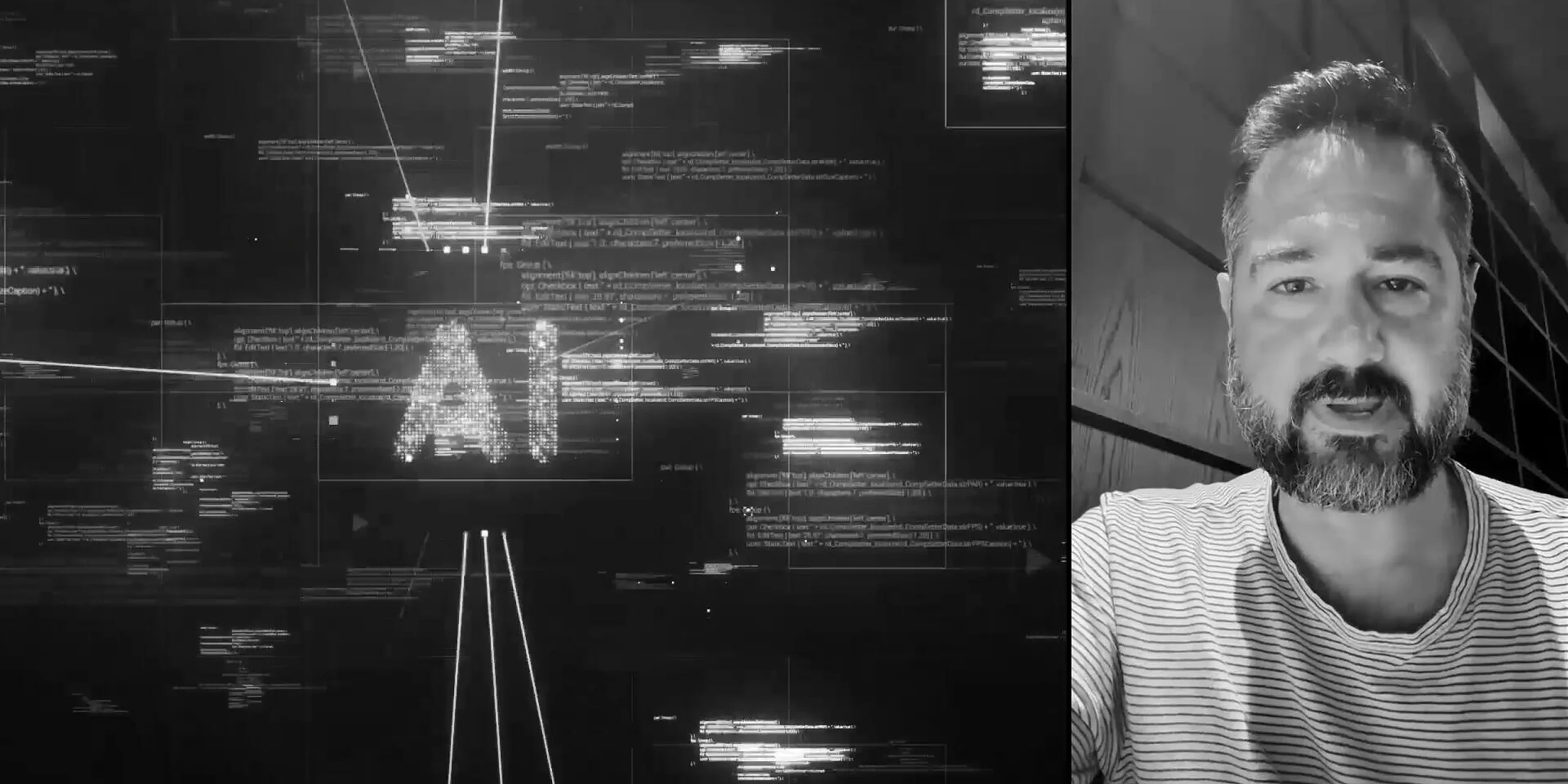
We spoke to Kevin Karp, winner in the Agentic Discovery category, about his project, RE•CLAIMER.
RE•CLAIMER is a claim simulator for the age of AI agents. It helps marketers evaluate whether a brand claim, promotion, or benefit is likely to be ignored, mentioned, considered, or used as evidence in an AI-generated recommendation. Here’s what Kevin had to say about the win, and how he intends to develop the project.
The Spark: What core problem inspired your idea?
The brief, ha! No, seriously, the key was trying to find an instance of AI referencing a first-party source in its citations and realizing there were almost none across all four major players (ChatGPT, Gemini, Claude, Perplexity) in any of the queries I searched. I was looking at what a brand could do in its owned spaces, and the answer became, “Almost nothing.” And that created a challenge. How do you test something where you have no control over the variables, meaning the entire published internet?
The answer became the core of the solution: Map the sources being cited, build proxies of those sites, and hand agents an editable, sealed evidence pack so you can test copy and ideas.
The Build: What was the biggest technical challenge during the sprint, and how did you pivot?
The biggest technical challenge was... that I'm not technical. I've never coded a line, never built a platform — this is closer to walking into a karate tournament without knowing karate and winning it. I didn't have a team, so my version of a "pivot" looked different from what an engineer's would: instead of trusting one AI to build this, I turned several of them against each other. I did the concepting with ChatGPT and Gemini, had Codex execute, and never let any single model's output stand unchecked. I'd put a ChatGPT conversation against Codex, or run Gemini and ChatGPT against each other, and force them to review one another's thinking until they landed on consensus. That adversarial-review process became the real pivot. It's not a workaround anymore, it's just how I build now.
The Stack: Which AI models, frameworks, or APIs made this solution possible?
I used ChatGPT and Gemini for concepting, and Codex for execution. Early on, Codex helped with the research groundwork, turning webpages into Markdown documents that could be handed to Gemini, ChatGPT, and Perplexity in incognito or temporary mode to test the hypothesis cleanly, without any of them pulling from memory of prior conversations.
For the build itself, Codex kept steering toward Streamlit for rapid prototyping — and as the nontechnical half of that partnership, I wasn't in a position to argue.
What's Next: How do you plan to develop or scale this project post-hackathon?
That sure feels like the $50 million question! The product I've continued to develop over the past two months makes the hackathon version look like a clunky piece of junk. I've learned so much more about content structure, AEO and SEO, and PR and the media. I've had the time to clear out all the useless and redundant dashboard information that AI programmers will add if you don't spend the time to think critically about the work. I've adapted the methodology to optimize first-party pages. I have very different, much sharper, proprietary metrics for grading results. But that's what two months buys you instead of two days.
Most AEO platforms tell you what happened after you publish. RE•CLAIMER is built to test what could happen before you do, and it already outperforms everything else claiming to "transform your business." What I need now is someone who can help me get it into the world: pilot partners, an AEO or PR agency, a technical co-founder, or an investor who wants in early. If that's you, let's talk.
Thank you to Kevin Karp for taking the time to share your vision behind the build. Keep an eye on the AI & Tech Sandbox hub to discover what’s next for Kevin and the rest of our winners.
Interested in taking part in our next Hackathon? Sign up for our newsletter to find out when the next competition launches.
Up Next
Recommended content for you