Hollywood’s AI Lesson Is to Start With the Creative Problem
November 24, 2026
Hollywood has always been shaped by technology. Film itself was a technological invention, digital cameras transformed production, visual effects opened up worlds that could never exist physically, and streaming changed how stories reach audiences. Each shift mattered because creative people worked out what technology could enable them to do differently.
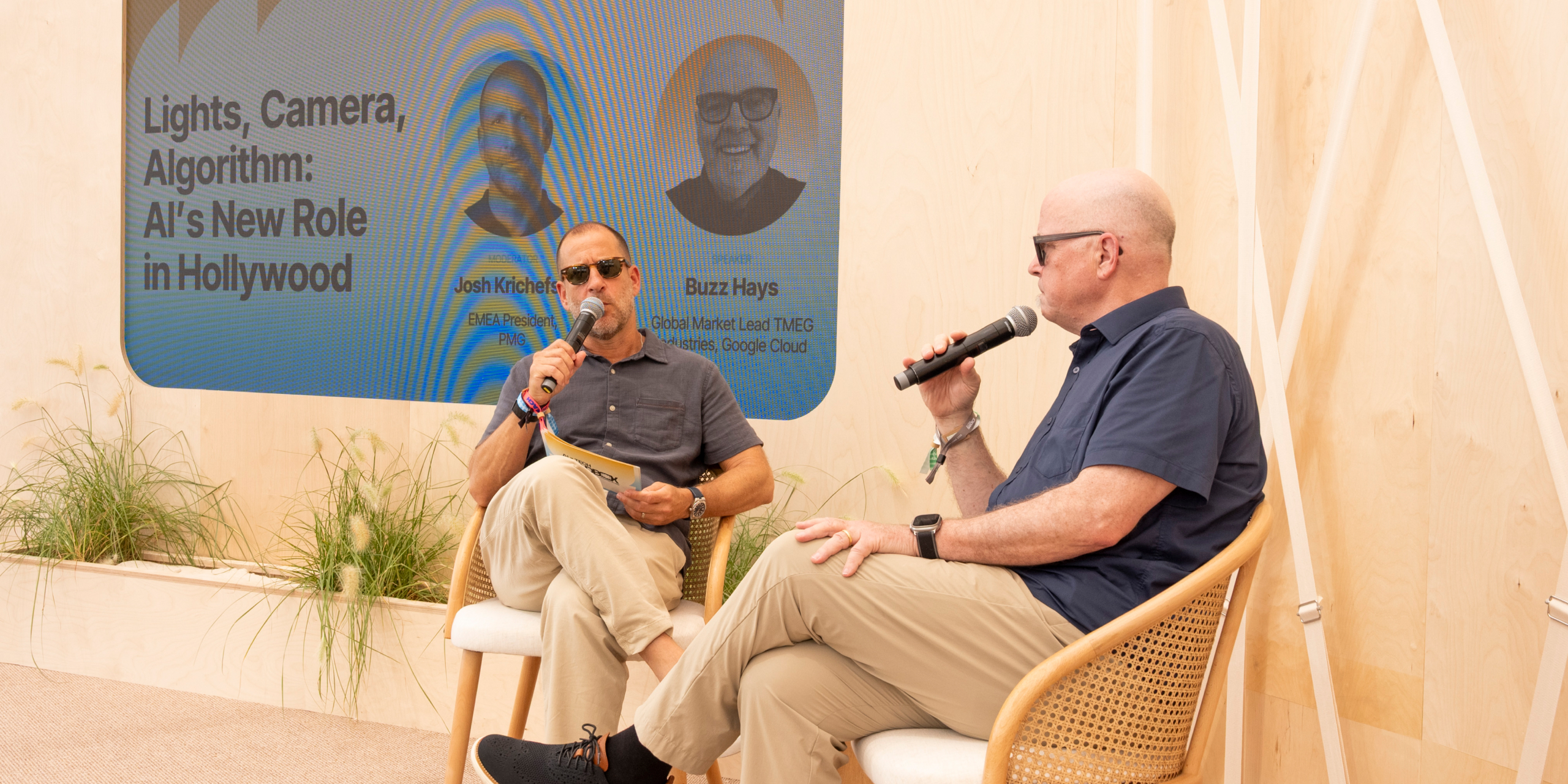
I recently spoke with Buzz Hays, Global Market Lead for Media and Entertainment at Google. Buzz has spent much of his career moving between Hollywood and technology, from Lucasfilm and major studio productions to Google, and one idea from our conversation has stayed with me ever since.
The most interesting question is rarely “What can AI do?” but rather “What creative problem have we never been able to solve before?” and that distinction matters far beyond Hollywood.
Start with the Work
Every major technology cycle creates a temptation to begin with the tool. Businesses see a new capability, buy access to it, and then start searching for places to deploy it. AI makes that particularly easy because almost anyone can open a prompt box and begin generating something within seconds.
Buzz talked about filmmakers using AI to develop storyboards. A director may know exactly how a scene should feel but still struggle to communicate that vision quickly. AI can shorten the distance between the idea in someone’s head and something a producer or crew can react to.
The lesson for any organization adopting AI is to start with how people actually work. Look at where ideas get stuck, where intent gets lost, and where unnecessary effort sits in the process. Those are often better starting points than the capabilities listed on a product page.
Creative Control Becomes More Valuable
One phrase Buzz used during our conversation particularly resonated with me. He prefers to talk about having “AI in the loop,” a framing that keeps the creative person firmly in control while making AI another means of expressing, exploring, or extending an idea.
That framing becomes more important as the technology improves because easier production increases the value of judgment.
I entered advertising three decades ago because I loved the creativity of the industry, although at the time I largely discounted the possibility of becoming a creative myself because I could not draw. Someone entering the industry today has a very different set of tools available to them, which means some of those technical barriers between having an idea and being able to explore it are beginning to fall away.
As those barriers fall, taste, judgment, and intent carry more weight. AI can generate more options, but people still have to decide which ideas are worth pursuing and what good looks like.
The Ideas that Used to be Impractical
We discussed the immersive reimagining of The Wizard of Oz at Sphere in Las Vegas. The original film was created for a traditional cinema frame, so bringing it into a radically larger visual environment meant imagining parts of the world that had never been captured. AI gave the team a way to tackle a creative problem that would have been extraordinarily difficult to solve through traditional production alone.
For brands, that should prompt us to revisit ideas that once felt too complex, expensive, or difficult to execute. Experimentation needs to move beyond asking a model to reproduce work we already know how to make. The more interesting challenge is discovering where the technology can take creative thinking next.
Curiosity is a Business Capability
I asked Buzz what brands and agencies should understand about AI's impact on the content they create, and his answer came back to curiosity.
Every great creative understands both the possibilities and the restrictions of their tools because those boundaries help shape the work. AI gives us a new set of boundaries, and right now we are still discovering where many of them sit.
That is why experimentation needs to move beyond asking a model to reproduce work we already know how to make. The more interesting challenge is understanding what a creative person can now attempt for the first time, especially as an old technical, economic, or production constraint begins to disappear.
AI gives us a bigger creative canvas, and the value will come from people who are curious enough to explore it, have the judgment to decide what belongs on it, and understand the creative problem well enough to know why it should exist in the first place.
Up Next
Recommended content for you


AI is changing how consumers shop. Marketers may be preparing for the wrong part of the journey.
Koddi’s Eric Brackmann explores how AI assistants are reshaping product discovery and consideration. New research suggests the biggest near-term opportunity for brands is influencing decisions before consumers are ready to make a purchase.